

How to Create Bends in Wire Mesh Cable Trays (Step-by-Step Guide)
- Sandeep Singh
- May 2
- 2 min read
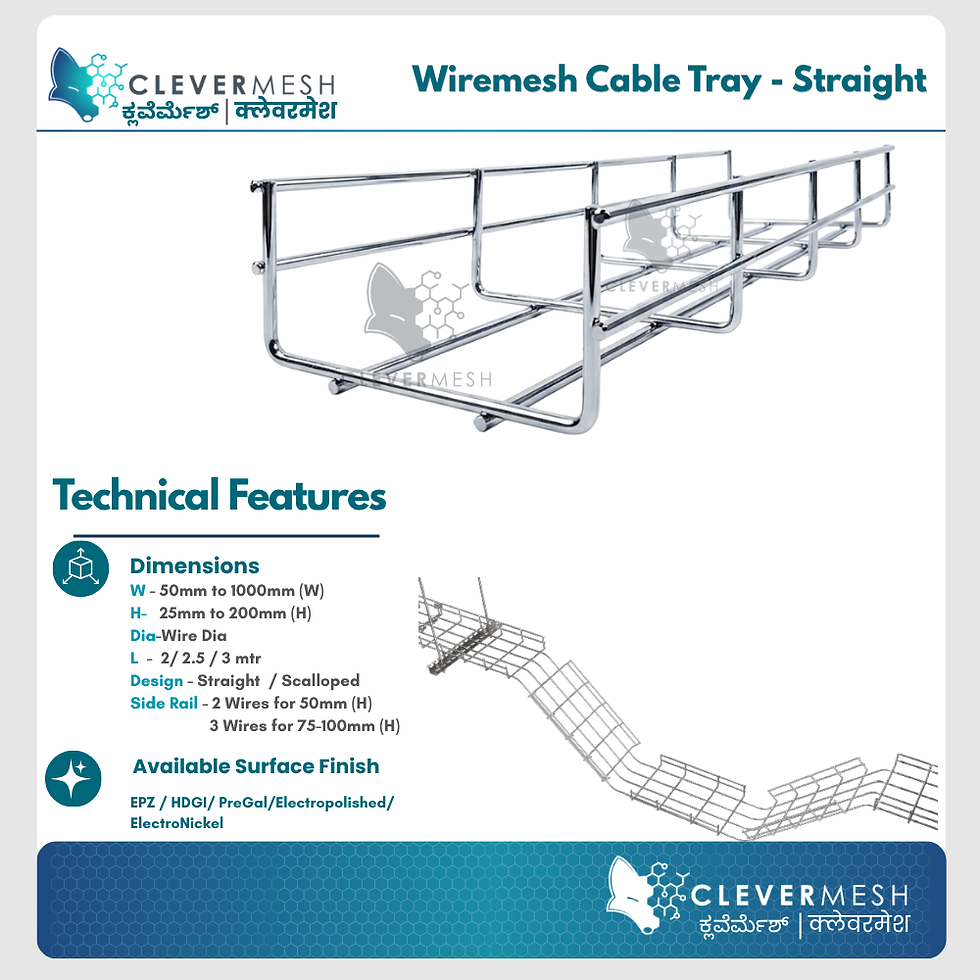
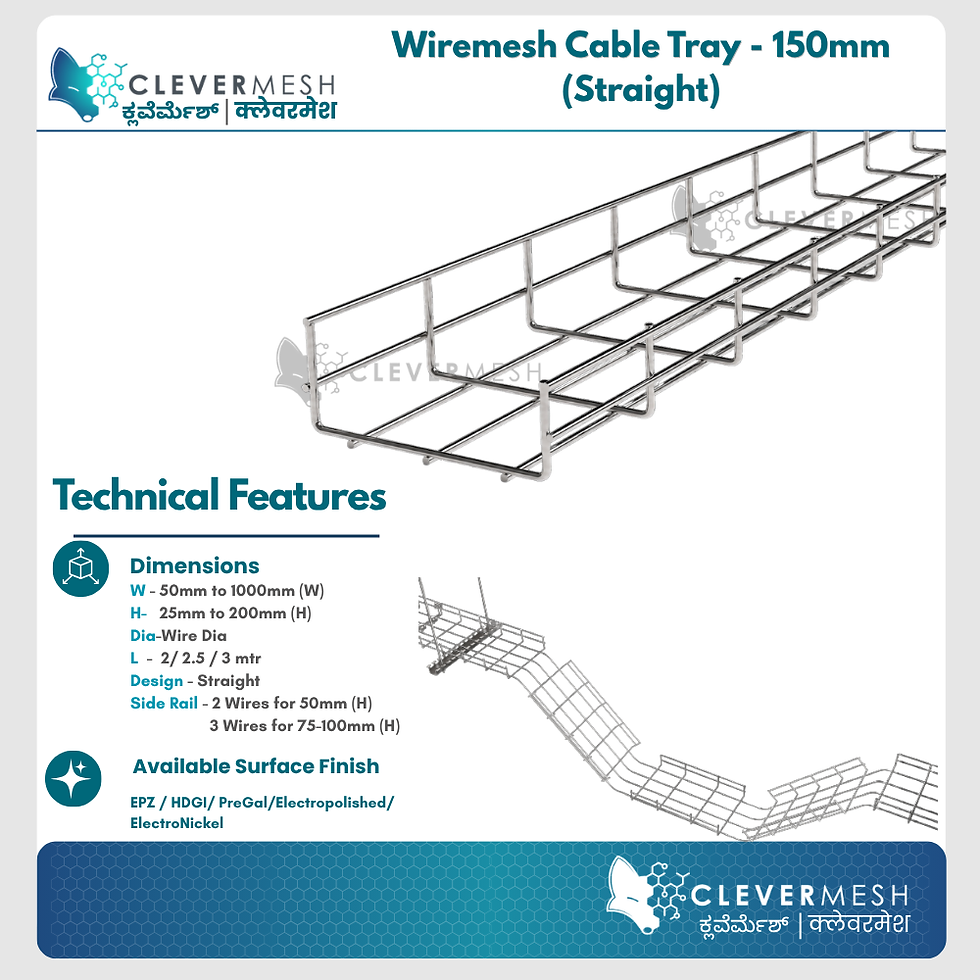
Wire mesh cable trays are widely used because of their flexibility and easy on-site modification. Unlike perforated trays, bends can be created directly at site without expensive fittings.
This guide explains how to make 90° bends, vertical bends, tees, and offsets in wire mesh cable trays safely and professionally.
Tools Required
Bolt cutter / cable cutter
Plier / nose plier
Measuring tape
Marker or chalk
Hand gloves (safety)
General Rule Before Cutting
Always mark the bend area properly
Do not cut all wires completely (retain structural strength)
Maintain smooth edges to avoid cable damage
Bend gradually, do not apply sudden force
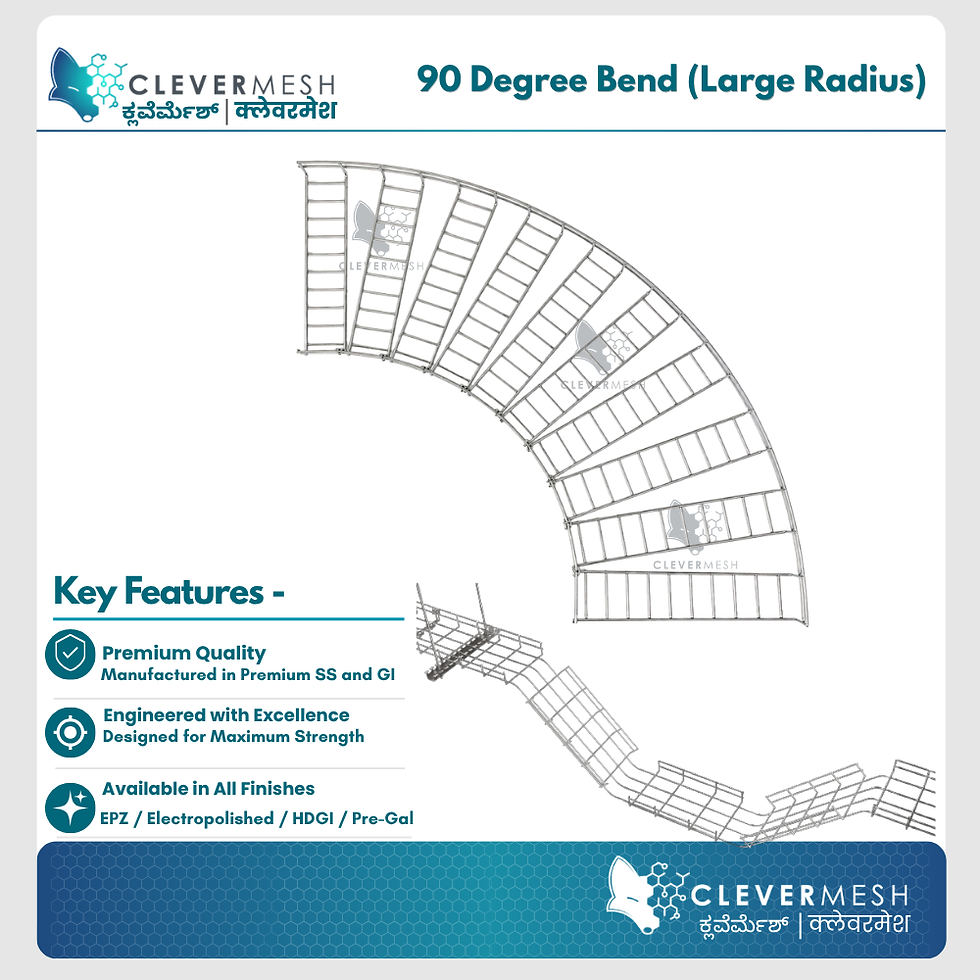
1. Horizontal 90° Bend (Flat Bend)
Steps:
Mark the bending section on both sides of the tray
Cut the bottom longitudinal wires (keep side wires intact)
Make small cuts on side wires where required
Gently bend the tray to 90° angle
Adjust alignment using plier
Secure with coupler or tie wire if needed
👉 Use case: Turning tray left or right
2. Vertical Bend (Up / Down Bend)
Steps:
Mark the bending area
Cut the side wires partially
Keep bottom wires continuous
Bend tray upward or downward
Ensure smooth curve (avoid sharp bend)
Fix with support
👉 Use case: Going up or down between levels
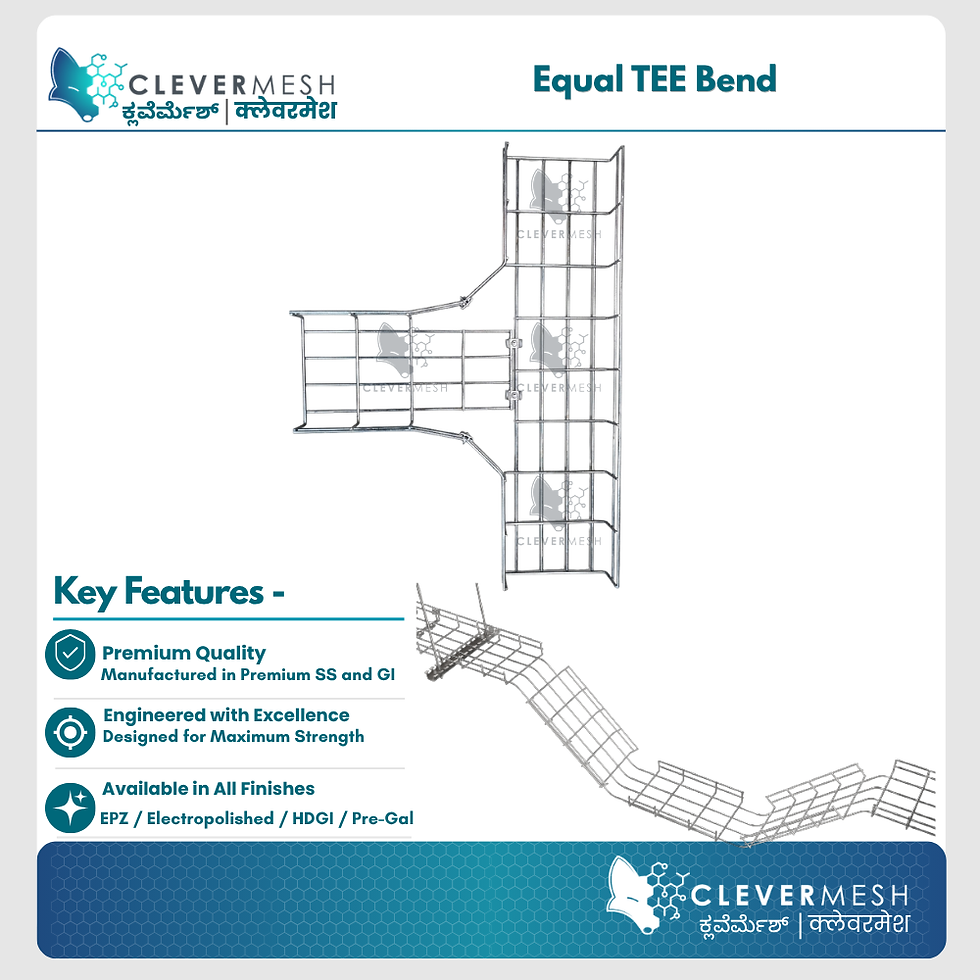
3. Tee (T-Junction) Bend
Steps:
Mark center point where branch is required
Cut mesh area in rectangular shape
Insert branch tray
Bend wires around the joint
Secure using couplers or binding wire
👉 Use case: Creating cable branching
4. Cross Bend (4-Way Junction)
Steps:
Cut cross opening in main tray
Insert crossing tray
Bend and lock wires
Secure properly
👉 Use case: Multi-direction cable routing
5. Offset Bend (Side Shift)
Steps:
Mark two bend points
Cut alternate wires
Bend tray in two directions
Create required offset
Fix alignment
👉 Use case: Avoiding obstacles
Important Tips for Strong Bending
Keep minimum 2–3 wires intact for strength
Avoid over-cutting
Use SS or GI couplers for heavy load areas
Maintain proper bend radius for cable safety
Smooth sharp edges after cutting
Common Mistakes to Avoid
❌ Cutting all wires completely
❌ Creating very sharp bends
❌ Not supporting the bend area
❌ Ignoring cable bending radius
❌ Leaving sharp edges
Advantages of On-Site Bending
No need for pre-fabricated fittings
Faster installation
Cost saving
Flexible layout design
Easy modifications
Conclusion
Creating bends in wire mesh cable trays is simple, fast, and cost-effective when done correctly. With proper cutting and bending techniques, you can achieve professional cable routing without additional accessories.
This guide on wire mesh cable trays is very clear and helpful, especially for learning technical steps. I remember working on a class project and relying on help with assignment when I got confused about explaining the process. It helped me understand things better and complete my work on time. The article shows how step by step learning makes hard topics easier.